AFS 2008 Annual Meeting, October 22-26, Louisville, Kentucky: Invitation for Participation
The Commons and the Commonwealth is the theme for the American Folklore Society's 120th annual meeting, to
be held at the Hyatt Regency Hotel in Louisville, Kentucky, on October 22-26, 2008. The Annual Meeting Committee for this year’s
meeting is Chris Antonsen, Erika Brady, Tim Evans, Barry Kaufkins, Johnston A. K. Njoku, and Michael Ann Williams
from Western Kentucky University; and Bob Gates, Mark Brown, and Sarah Schmitt from the Kentucky Folklife Program.
Since the designation of Kentucky as a “commonwealth” in 1785, Kentuckians have struggled over control of their
common wealth: as a border state during the Civil War; through coals wars, labor wars and tobacco wars and attempts by outsiders and
insiders alike to define and exploit an “authentic” folk culture. Inherent in the idea of commonwealth is the notion of
the general good and shared potential. This year’s meeting in the Commonwealth of Kentucky is a time to consider anew the politics
of advocacy in public welfare. From diverse issues ranging from mountaintop removal to the transformation of agriculture to mass-mediated
cultural homogenization, Kentucky’s geopolitical landscape reflects broader tensions between economic change and cultural conservation. This
year’s theme is devoted to reevaluating folklorists’ professional role in generating and maintaining a common interest
in the common good.
Folklorists have often seen themselves as defenders of community and tradition, especially among the marginal and powerless. In
filling this role, we have sometimes walked a fine line between community empowerment and cultural imperialism. Globalization represents
a particular challenge to folklorists, as we seek to defend the commons by using communicative forms opened to us by new technology. As
a discipline that focuses on local knowledge, vernacular aesthetics, and insider/outsider collaboration, folklorists can take a key
role in the struggle to link natural and cultural resources in ways that support diversity, renewability and the local. In this, we
share common interests with scientists, activists, artists and others who value diversity. The idea of the “commons” returns
us to the notion that some forms of wealth belong to us all, and cannot be reduced to marketplace commodities without disastrous results.
For the 2008 annual meeting in Louisville, the Annual Meeting Committee especially encourages panels, forums, poster sessions
and other activities that focus on the idea of the commons, and highlight the connection between cultural and natural environments,
or between local and global culture. Submissions can encompass a wide variety of topics, from community aesthetics and local understandings
of environment, to electronic forms of community, international copyright laws or global climate change.
1. General Information
New Meeting Policies and Procedures
Beginning with the 2008 annual meeting, we are instituting four new annual meeting policies and procedures, all designed
to improve the intellectual exchange at the meeting and to simplify the organization of the meeting.
1. There can be no more than 4 papers in a single panel. If a panel includes a discussant, there can be no more than 3
papers in that session.
2. Each paper presentation will be allotted 30 minutes on the program. This slot includes 20 minutes for the presentation and approximately 10 minutes for questions and discussion, which will follow immediately
after each presentation. To accommodate this change, sessions will now run for 2 hours rather than 1 hour and 45 minutes.
3. In order to demonstrate the significance of the session, the short and long abstracts for each organized session must address the contributions the session will make to greater understanding of either 1) the theme of this year’s meeting or 2) one or more core concepts of the field of folklore; e.g., art, context, folk, genre, group, identity, performance, text, or tradition. We encourage all approaches to this requirement, and welcome proposals that challenge, stretch, expand, enrich, or refute current or past definitions of any of these concepts. We also encourage those submitting individual proposals to address the theme or these concepts in the same ways.
4. Chairs of organized sessions will be responsible for submitting all presenters’ names, institutional
affiliations, presentation titles, abstracts, and audio-visual equipment needs for their session. Chairs must submit these materials all at once,
and must submit them online. This means that all individual presenters in a pre-organized session must do two things:
a. They must give their session chair their names, institutional affiliations, presentation titles, abstracts, and audio-visual equipment needs before the deadline, so that the chair can submit all proposal materials for the session by the deadline.
b. They must complete their own registration and payment for the meeting online by March 31.
Deadline
The deadline for submission of all registrations, fee payments, and proposals for the AFS 2008 annual meeting
is March 31, 2008. We will reject submissions not received online or postmarked by the deadline, as well as those
that do not contain all necessary materials at the time of the deadline.
If you plan to attend the annual meeting but will not make a presentation, you may register any time between now and the
pre-registration deadline of August 31, 2008, or you can register on site at higher fees.
The Meeting Registration, Payment, and Proposal Process
Submitting a proposal for the annual meeting program involves three steps: registering by providing us
with your name, institutional affiliation, and contact information, paying your registration fee, and submitting your
proposal.
The way you take these steps depends upon what you are proposing to do at the meeting.
- If you are proposing an organized session—which must be done by the chair of the session—you
first need to get proposal information from all the participants in your session. You will then register yourself and pay your personal
registration fee, and submit the complete proposal for the session and for all its presentations.
- If you are proposing to participate in an organized session, you need to give your chair
your proposal information well before the deadline, since she will have to submit that information as part of her organized session
proposal. You will also need to register and pay your registration fee yourself by the deadline.
- If you are proposing an individual presentation, you register, pay, and submit your proposal all at
once.
Registration Fees
To complete the proposal process, you must also pay the appropriate registration fee. Those who are submitting proposals for individual presentations pay this fee as part of the submission process.
Those who are part of an organized session proposal, whose proposals will be submitted by the session chair, must also register and pay their fees online before the deadline. The fee you pay depends upon your AFS member status; non-AFS members may submit proposals, but they pay higher fees.
AFS Regular Member: $115
AFS Retired Member: $95
AFS Independent Member: $95
AFS New Professional Member: $75
AFS Student Member: $45
Non-Member: $150
Student Non-Member: $75 (Or, for only $5 more you can become an AFS student member, register for the meeting at student rates, and receive all the other benefits of AFS membership!)
Submitting Your Materials
We strongly encourage you to submit your registration, registration fee payment, and proposal online through the AFS web site,
which will increase our efficiency in tracking proposals and our accuracy in preparing the program book. Chairs of all organized sessions—panels,
poster sessions, forums, and media sessions—must submit their materials online. For online submissions, AFS
provides a secure payment page (operated by VeriSign) to safely process credit card information. AFS accepts MasterCard and VISA only,
and all transactions will be made in US dollars.
If you choose to submit your materials by fax or mail, please go to the AFS web site to download the forms for your registration,
registration fee payment, and proposal. If you are submitting your materials by fax, pay your registration fee by providing your MasterCard or VISA information. Fax your materials
to AFS’s attention at 614/292-2407. If you are submitting your materials for an individual presentation in hard copy by mail,
send your materials (including your MasterCard or VISA card information or a check in US dollars for your registration fee) to: AFS
2008 Annual Meeting, Mershon Center, Ohio State University, 1501 Neil Avenue, Columbus, OH 43201-2602 USA. Your mailing must be postmarked
by March 31, 2008.
Proposal Review Process
The Annual Meeting Committee will carry out a blind review of long abstracts for all annual meeting presentations. In reviewing
proposals, they will look for a clear thesis or analytical statement, a coherent argument, familiarity with previous research, and,
in the case of pre-organized sessions in particular, the contribution of the session to a deeper understanding of the theme of the
meeting, or of one or more core concepts of the field of folklore; e.g., art, context, folk, genre, group, identity, performance, text, or tradition.
AFS will e-mail you notification of acceptance or rejection for the annual meeting program by June 1, 2008.
We will post a preliminary version of the 2008 annual meeting program schedule on the AFS web site by July 1, 2008. Please review this schedule carefully. We must receive all your requests for changes and all corrections
to this program by July 15, 2008. We will try to accommodate the changes you request before July 15, but we cannot
guarantee such accommodation.
If you notify us by August 31, 2008, that you are unable to attend the annual meeting, we will refund
your registration fee. We cannot issue refunds after this date.
2. Proposals for Organized Sessions
Four kinds of organized sessions can be proposed: panels, poster sessions, forums, and media
sessions.
If you are the chair of an organized session, you must submit, on the organized session proposal form,
the title and long and short abstracts for your session as a whole, and the names, institutional affiliations, contact information,
presentation titles, and long and short abstracts for all participants in the session. You must also submit your own personal registration
form and pay your own registration fee.
If you are a participant in an organized session, you must provide your name, institutional affiliation,
contact information, presentation title, and long and short abstracts to your session chair before March 31 so that she can submit
all materials online by the deadline. You also must submit your own personal registration form and pay your registration fee.
Panels
Panels consist of a set of papers pre-organized on a given topic. There can be no more than 4 papers in a single panel
session. If a session includes a discussant, there can be no more than 3 papers in that session. Each paper presentation will be allotted
30 minutes on the program. This slot includes 20 minutes for the presentation and 10 minutes for questions and discussion, which will
follow immediately after each presentation.
Required materials: The chair of a panel must submit online her registration, registration
fee payment, and an organized session proposal form, including long and short abstracts for the panel as a whole and for each paper
on the panel. All participants in the panel must provide their proposal information to the chair well before the deadline, and must
separately submit their own registration and registration fee payment.
Poster Sessions
Poster sessions consist of a small set of poster presentations pre-organized on a specific topic. They provide an accessible
and congenial format for graphic presentation of critical issues, results of field research, public and applied folklore projects,
and works-in-progress. All poster presentations are made simultaneously during the session.
Poster sessions are customarily marked by lively and informal discussion between the presenter and individuals viewing
the posters. Presenters typically discuss their work informally with those in attendance, and post graphic materials (photographs,
publications, maps, diagrams, etc.) on a display board along with textual summaries of their work.
Poster sessions are meant to be low-tech: presenters discussing their work orally, using a single poster or display board
on which are mounted useful visual and textual materials. If the presentations in your session require audio-visual equipment beyond
presenters’ unaided laptops, please propose a panel, since AFS does not provide audio-visual equipment for poster sessions.
Required materials: The chair of a poster session must submit online her registration,
registration fee payment, and an organized session proposal form, including long and short abstracts for the poster session as a whole
and for each poster presentation in the session. All participants in the poster session must provide their proposal information to
the chair well before the deadline, and must separately submit their own registration and registration fee payment.
Forums
Forums are informal discussions organized around a specific subject, issue, theme, or topic. Forums may include no more
than six participants, and should be designed for extensive interaction among the panel and audience. While not intended as paper sessions,
forums may include brief (5-8 minute) prepared presentations. Forum proposals do not require presentation titles or abstracts from
the individual participants.
Required Materials: The chair of a forum must submit online her registration, registration
fee payment, and an organized session proposal form, including a long and short abstract for the forum as a whole. All participants
in the forum must provide their proposal information to the chair well before the deadline, and must separately submit their own registration
and registration fee payment.
Media Sessions
We encourage AFS annual meeting sessions that feature the presentation of one or more film or video works. These films
or videos may be completed or works-in-progress, and one or several works may be shown and discussed within the two hours of the session. Please
allow time for discussion in your proposed session.
In the case of completed works, please submit a copy of the work on VHS or DVD (NTSC format), along with the materials
listed just below. In the case of works-in-progress, describe the approach and content of the finished work in your abstract; we also
encourage you to submit a five-minute sample, with explanatory notes if necessary, on VHS or DVD (NTSC format).
Required Materials: The chair of a media session must submit online her registration,
registration fee payment, and an organized session proposal form, including long and short abstracts for the session as a whole and,
if the session is to feature more than one media work, for each media work in the session. She must also mail any VHS or DVD works
or samples to: Media Sessions, AFS 2008 Annual Meeting, Mershon Center, Ohio State University, 1501 Neil Avenue, Columbus OH 43201-2602
USA, postmarked by March 31, 2008. Those samples will not be returned. All participants in the media
session must provide their proposal information to the chair well before the deadline, and must separately submit their own registration
and registration fee payment.
3. Proposals for Individual Presentations
Individual proposals can be submitted for papers or for poster presentations. The
program committee will group accepted papers into panels, and posters into poster sessions.
We encourage those submitting individual proposals, in their long and short abstracts, to explicitly
address the meeting theme or one of these core concepts of their field of folklore: art, context, folk, genre,
group, identity, performance, text, or tradition.
Papers
We will accept proposals for individual papers on any focused topic that relates to folklore. The program committee will
group accepted papers into panels.
Required materials: Each individual paper presenter must submit her registration, registration fee payment,
and an individual proposal form, including long and short abstracts for the paper.
Poster Presentations
Poster presentations provide an accessible and congenial format for graphic presentation of critical issues, results of
field research, public and applied folklore projects, and works-in-progress. All poster presentations are made simultaneously during
the session. Presenters typically discuss their work informally with those in attendance, and post graphic materials (photographs,
publications, maps, diagrams, etc.) on a display board along with textual summaries of their work. The program committee will group
accepted poster presentations into poster sessions. Poster presentations are meant to be low-tech: presenters discussing their work
orally, using a single poster or display board on which are mounted useful visual and textual materials. If you need to use audio-visual
equipment beyond your own unaided laptop to make your presentation, please propose a paper, since AFS does not provide audio-visual
equipment for poster presentations.
Required materials: Each individual poster presenter must submit her registration, registration fee payment,
and an individual proposal form, including long and short abstracts for the presentation.
4. Other Proposals
Proposals for Professional Development Workshops
Through professional development workshops, participants are afforded opportunities to learn new professional practices
and discuss relevant techniques and issues in a highly focused manner. These workshops may run for two hours, a half day, or a full
day. The fees of presenters and instructors, and other costs for the workshop, can be defrayed by charging a workshop fee or by a Section’s
financial support. Presenters and instructors can also choose to donate their expertise and services.
Required Materials: The chair of a professional development workshop must submit the professional development
workshop proposal form online on the AFS web site, including long and short abstracts for the workshop.
Proposals for Special Events
AFS sections, university folklore programs, and other organizations may propose several kinds of special events: section
business meetings, section-sponsored lectures, receptions, and the like.
Required materials: Any AFS section, university folklore program, or other organization wishing to host a special event
must submit the special event proposal form online on the AFS web site.
5. AFS Annual Meeting Presentation Policies
AFS Membership
Both AFS members and non-members may submit proposals for presentations, or may simply attend the meeting without presenting,
but non-members must pay the higher registration fees noted on the registration form.
Number of Presentations
You may appear only once as a presenter in the annual meeting program. You may also serve as the chair of the session in
which you are making that presentation. You may serve as the chair or discussant in one other session; e.g., as the chair of a session
made up of papers delivered by your students.
Computer-Based Presentations
We encourage annual meeting participants to make creative use of new electronic media to document and present folklore
and traditional culture. At the same time, we have seen the costs of providing computer and LCD projector equipment for annual meeting
presentations rise astronomically in recent years. To support the presentation of work in new media while keeping annual meeting costs
manageable, AFS follows these policies regarding computer-based presentations:
- Annual meeting presenters should use computers only to present innovative multi- media combinations of text, audio, and
visual images. Presenters who want to present traditional single-media displays of text, audio, and/or visual images should use the
more economical and equally effective alternatives of (respectively) overhead projector or printed handouts; cassette recorder or
CD player; or slide projector, VCR, or DVD player.
- All annual meeting presenters wanting to use computers must bring their own portable computer for use at the meeting. AFS
will not provide computers to annual meeting presenters.
- For computer-based presentations, AFS will provide LCD projectors in the largest meeting rooms; in smaller rooms, we
will provide video monitors and S-video cables to presenters using computers in their presentations.
No-Shows
AFS defines a no-show as someone on the program who is not physically present at her/his session at the annual meeting
and either (1) has not notified AFS in advance that she cannot attend the meeting or (2) has not submitted a presentation to be read
by the chair or another person at the meeting.
No-shows are conspicuous in their absence. They inconvenience the chair, their fellow presenters, and those attending the
session. No-shows will not be considered for the following year’s program. If you notify AFS in advance, or submit a presentation
to be made by someone else at your session, you will not be penalized. You are responsible for finding your own alternative presenter.
6. Financial Support
The Society is offering several forms of financial support to those planning on participating in the AFS 2008 annual meeting.
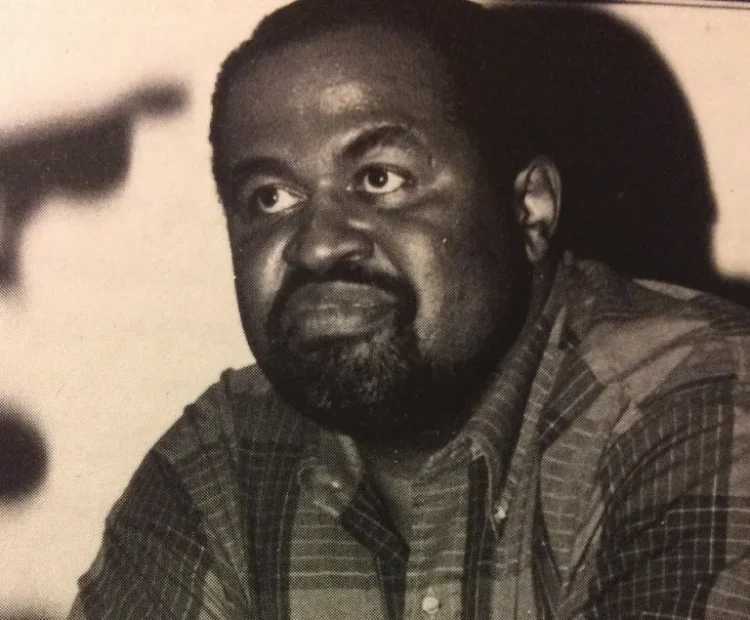
Gerald L. Davis Fund Travel Grants
In memory of folklorist Gerald L. Davis, AFS will provide a limited number of grants of up to $500 to persons of color
who want to attend the annual meeting. Prospective applicants may be graduate students, community scholars, staff members of public
folklore programs, or others who want to attend. AFS will also waive annual meeting registration fees for Gerald L. Davis Fund grant
recipients.
Applicants should submit a letter stating their specific reasons for wanting to attend the AFS meeting, the impact they
expect the meeting will have upon their work, estimated expenses, and the amount requested. Applications will be reviewed and grant
recipients selected by the AFS Task Force on Cultural Diversity.
The deadline for applications is March 31, 2008. Send letters of application by mail to Marilyn White,
Chair, AFS Cultural Diversity Task Force, Department of Sociology and Anthropology, Kean University, Union NJ 07083 USA or by e-mail
to mawhite@cougar.kean.edu.
AFS Student Travel Stipends
AFS will provide stipends of $300 each to selected students whose presentations are accepted for the annual meeting program. There
are no additional application requirements for these stipends; your presentation proposal, if accepted, will serve as your stipend
application. Decisions will be made on the basis of the quality of the proposal and geographical representation among students’ institutions. Previous
recipients of these stipends are not eligible. We will notify recipients in July.
Archie Green Student Travel Awards
The AFS Public Programs Section will provide up to three awards of up to $500 each, named for folklorist and activist Archie
Green of San Francisco, to students to defray costs for traveling to the meeting. The Section is interested in supporting graduate
and undergraduate students who have an interest in working as public folklorists or who have chosen an area of public folklore as a
primary topic of research.
Application materials will consist of: (1) a two-page letter written by the applicant, (2) a letter of support written
by a faculty member or public folklorist that describes the student’s interest in public folklore and supports the student’s
plan for using the AFS meeting to further her or his interests in public folklore, and (3) a budget outlining anticipated expenses. The
applicant’s letter should address her/his interest in public folklore, goals for attending the meeting, and plans for using the
resources of the meeting to further her/his academic and/or professional development. Previous recipients of student travel awards
are not eligible to apply.
The deadline for receipt of applications is July 1, 2008. Awards will be announced by August 1. To apply,
send three copies of all materials to Archie Green Student Travel Awards review committee chair Amy Mills, Northwest Folklife, 305
Harrison Street, Seattle WA 98109 USA; if you have questions, please contact her at amy@nwfolklife.org.
Stipends for International Participants
The American Folklore Society warmly encourages the attendance of folklorists and other cultural specialists from outside
the United States. International scholars are invited to write to Timothy R. Tangherlini, chair of the AFS Committee on International
Issues, to discuss ways in which they might participate in the meeting.
A limited number of travel stipends will be available on a competitive basis for international scholars and practitioners
at a junior level who are participating in the annual meeting program. Stipends will vary between $500 and $800, depending on the availability
of funds and the number of applicants. Previous recipients of international travel awards are not eligible to apply.
The AFS particularly encourages applications from individuals who have limited or no institutional support for travel,
as well as from independent scholars and freelance practitioners. Applicants should be in the early stages of their careers. We especially
hope to hear from applicants from outside western Europe. We also encourage preliminary inquiries.
We encourage AFS members and sections to spread the word, to help identify potential applicants, to collaborate with international
colleagues in the application process, or to provide or seek matching funds to complement the possible AFS award. For example,
by adding a visit to your campus or a consultation at your agency, you could fruitfully expand on an international visitor’s
participation in the AFS meeting. We especially welcome AFS member assistance in organizing panels that include international
participants.
Applications should include a brief curriculum vita and a letter briefly outlining what paper or other presentation the
applicant will make, how she will benefit from attending the meeting, and how she plans to communicate the experience in her/his home
professional context. The overall goal of the travel awards is to increase international communication and awareness of international
issues in our field. Since the AFS has limited funding available, it is important for applicants to communicate their experience
effectively to a larger professional community back home.
The deadline for submission of applications is March 31, 2008. Application may be made by mail, by fax,
or by e-mail before March 1; after March 1, applications must be made by e-mail. You must also submit all proposal and registration
forms and information (as specified elsewhere in this Invitation for Participation) to the main AFS address by the same deadline. Direct
inquiries and applications to Timothy R. Tangherlini, Box 951537, University of California, Los Angeles CA 90095-1539 USA; tango@humnet.ucla.edu.
7. 2008 AFS Annual Meeting Deadlines and Important Dates
- March 31
- Online or postmark submission deadline for ALL proposals, registration forms, and registration fee payments
- Deadline for applications for Gerald L. Davis Fund Travel Grants and for Stipends for International Participants
- June 1
- Notifications of acceptance sent
- July 1
- Preliminary program posted on AFS web site
- Deadline for applications for Archie Green Student Travel Stipends
- July 15
- Deadline for receipt of changes or corrections to preliminary program schedule
- August 31
- Deadline for registration at lower pre-meeting rates
- Deadline for registration refunds
- Deadline for registration for pre-meeting tours and other special events, the details for which will be announced at the beginning
of June
- October 22-26
- AFS 2008 Annual Meeting, Hyatt Regency Hotel, Louisville, Kentucky