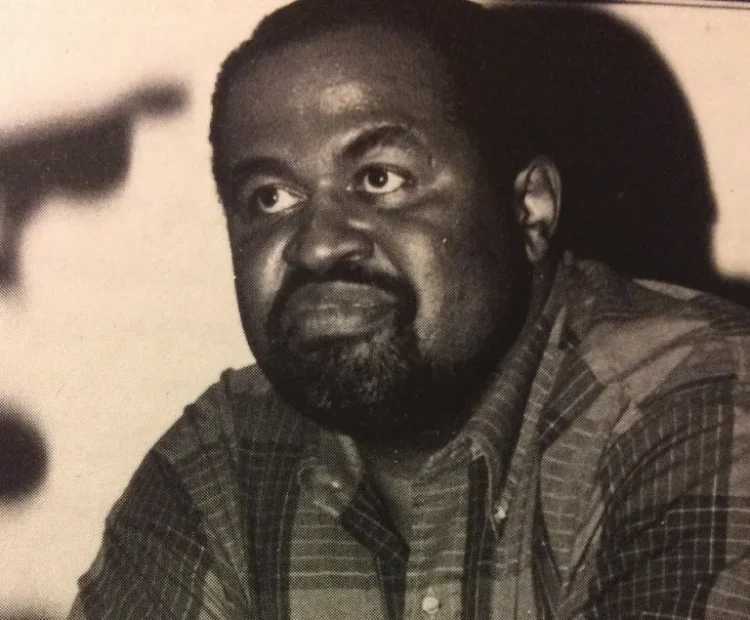
Potter Lanier Meaders of Georgia. Meaders has received a National Heritage Fellowship from the National Endowment for the Arts. Photograph by John Burrison, courtesy of the Center for Folklife and Cultural Heritage, Smithsonian Institution. From the Masters of Traditional Arts DVD-ROM, produced by Alan Govenar and published by ABC-CLIO.
 

AFS 2008 Annual Meeting, October 22-26, Louisville, Kentucky

2008 Annual Meeting Final Program Schedule (Word)

2008 Annual Meeting Final Program Schedule (PDF)

The Commons and the Commonwealth is the theme for the American Folklore Society's 120th annual meeting, to be held at the Hyatt Regency Hotel in Louisville, Kentucky, on October 22-26, 2008. The Annual Meeting Committee for this year’s meeting is Chris Antonsen, Erika Brady, Tim Evans, Barry Kaufkins, Johnston A. K. Njoku, and Michael Ann Williams from Western Kentucky University; and Bob Gates, Mark Brown, and Sarah Schmitt from the Kentucky Folklife Program.

Since the designation of Kentucky as a “commonwealth” in 1785, Kentuckians have struggled over control of their common wealth: as a border state during the Civil War; through coal wars, labor wars, and tobacco wars; and through attempts by outsiders and insiders alike to define and exploit an “authentic” folk culture. Inherent in the idea of commonwealth is the notion of the general good and shared potential. This year’s meeting in the Commonwealth of Kentucky is a time to consider anew the politics of advocacy in public welfare. From diverse issues ranging from mountaintop removal to the transformation of agriculture to mass-mediated cultural homogenization, Kentucky’s geopolitical landscape reflects broader tensions between economic change and cultural conservation. This year’s theme is devoted to reevaluating folklorists’ professional role in generating and maintaining a common interest in the common good.

Folklorists have often seen themselves as defenders of community and tradition, especially among the marginal and powerless. In filling this role, we have sometimes walked a fine line between community empowerment and cultural imperialism. Globalization represents a particular challenge to folklorists, as we seek to defend the commons by using communicative forms opened to us by new technology. As a discipline that focuses on local knowledge, vernacular aesthetics, and insider/outsider collaboration, folklorists can take a key role in the struggle to link natural and cultural resources in ways that support diversity, renewability and the local. In this, we share common interests with scientists, activists, artists and others who value diversity. The idea of the “commons” returns us to the notion that some forms of wealth belong to us all, and cannot be reduced to marketplace commodities without disastrous results.

1. Meeting Information

Registration and Fee Payment

The proposal deadline for this year’s meeting has passed. However, you may still attend the meeting by registering online and paying the appropriate pre-registration fee before August 31, 2008, or the higher, on-site fee at the meeting.

Pre-registration/on-site registration fees are:

AFS Regular Member: $115/$125
AFS Independent Member: $95/$105
AFS New Professional Member: $75/$85
AFS Retired Member: $95/$105
AFS Student Member: $45/$55

Non-Member: $150/$180
Student Non-Member: $75 (Or, until August 31, for only $5 more--$80--you can become an AFS student member, register for the meeting at student rates, and receive all the other benefits of AFS membership!)/$90

Program Schedule

You can read the program schedule for the meeting in Word or PDF by following the links at the top of this page. If you have corrections to the information in this schedule, please contact AFS as soon as possible. Depending upon when we receive these corrections, we will incorporate them into the text of the program book or into an addenda sheet that will be distributed at the meeting.

Refunds

If you notify us by August 31, 2008, that you are unable to attend the annual meeting, we will refund your registration fee. We cannot issue refunds after this date.

Hotel

Reservation information, prices, and codes for the Hyatt Regency Louisville are available online, and will be available until the cut-off date of October 1, 2008.


2. Tours, Workshops, and Special Events

Space is limited for most of the activities listed below. Registration will remain open until each activity reaches its capacity or August 31, 2008, whichever comes first.

2A. The Annual Meeting Committee has planned four pre-meeting tours for Wednesday, October 22:

Saints and Sinners Tour: 8:00 am--5:30 pm

A small section of central Kentucky was established as a stronghold of Roman Catholicism in the late 1800s when Catholics from Maryland began migrating and settling in the region near Bardstown. As luck would have it, bourbon whiskey, the product that Kentucky is most famous for, also became established in this same part of the state. This day-long tour, led by folklorist Nancy Nusz, who grew up in the region, will introduce you to some of the local Roman Catholic and Kentucky Bourbon history and sites.

Attendees will head south to Bardstown to the Basilica of St. Joseph Proto-Cathedral, completed in 1819 with the distinction of being the first cathedral west of the Alleghany Mountains. The tour will continue on the Heaven Hill Distilleries Bourbon Heritage Center where guests will get an introduction to the history of bourbon whiskey, tour a bourbon storage warehouse, and learn the art of bourbon tasting with some of the finest bourbon produced in the world. A full buffet lunch of local cuisine will follow at The Old Stable.

The first stop after lunch is the Abbey at Gethsemani, established by a group of Cistercian monks who left France in 1848. The Gethsemani community, now known as Trappist monks, was home to the famous American Catholic writer Thomas Merton. This part of the tour will end at 2:15pm in the chapel where we will listen to the monks chant None, the ninth canonical hour of the Divine Office (prayers).

The last stop will be at the Markers Mark Distillery, famous for its hand-dipped red wax seal. Located on a picturesque site outside of Loretto, Kentucky, this is the only operating distillery in the country to be designated a Historic Landmark. Here visitors will see the actually process of making whiskey from preparing the grains to the finishing touch where a small group of workers hand-dip the bottles to seal the tops. Makers Mark does not allow tastings but those who want to purchase a bottle can hand-tip their own at the completion of the tour. If time allows on the drive back, we will make a quick stop at the Sisters of Loretto Motherhouse. This was the first order of religious women in the area, founded in 1812.

Cost: $45 (includes bus, lunch, tour and donation).


Tour, workshop, and special event registration page

Thoroughbred: The Equine Industry in the Bluegrass, 7:45 am—5:15 pm

Perhaps second only in notoriety to bourbon whiskey, Kentucky thoroughbreds represent a sophisticated worldwide export. The rolling, green hills of Kentucky have bred some of the world’s most celebrated racehorses, and the industry is inseparable from the region’s history and culture. The scene is a dialectic featuring the wealthiest buyers and trainers on one side, and changing groups of new arrivals and disenfranchised groups on the other. This day-long tour, led by folklorist Sarah Schmitt, will explore various aspect of the equine industry in the bluegrass region of Kentucky.

The tour will begin in Louisville at the Kentucky Derby museum where folklorist Katherine Veitschegger will host a gallery talk about the exhibit, “Dreamchasers: The Art of Living on the Backside.” While visitors who experience the Kentucky Derby often look for the glamour of millionaire’s row, a community of over a thousand seasonal employees lives and work on the “other side” of the track. This exhibit features the art of these diverse employees.

From Louisville, the journey will wind through the back roads of horse country for a lunch break at Wallace Station Restaurant. Located between Midway and Versailles, Wallace Station features more than twenty types of sandwiches on home-baked bread, as well as soups, salads, pastries, pies, sweets, and old-fashioned ice cream, all in a casual atmosphere. Their fare includes Kentucky products, vegetarian options, and racing themes. Along the way, the group will learn to experience the races at Keeneland with an introduction to betting terminology, interpreting program books, and information on silks, popular farms, trainers, and racetrack etiquette. Bring money to participate in betting at Keeneland’s Fall Meet or walk the paddock where “the world comes to buy the best thoroughbred horses.”

As the tour makes its way back to Louisville, the final and appropriate stop is Old Friends, a non-profit retirement and rescue facility that provides dignified care to former race horses.

Cost: $55 (includes bus, entrance fees to museum, reserved seating at Keeneland, and donation to Old Friends).


Tour, workshop, and special event registration page

Western Kentucky Music Tour, 7:45 am—5:15 pm

The coal fields of western Kentucky are home to at least two stylistic innovations in American roots music: bluegrass, and Kentucky thumbstyle guitar (sometimes called “Travis-picking). The social and economic effects of coal mining shaped the musical milieu of the early twentieth century in this region, shaping local styles in ways that would have national and global influence on popular music.

On the two-hour bus ride to Rosine, tour leader Erika Brady will offer a brief overview of the musical styles and their historical and ongoing relationship to their home communities, as participants view firsthand the terrain of the coal fields. The first stop will be Paradise Park Museum Complex near Powderly, Kentucky, named for (but not located at) the former community celebrated in the John Prine song “Paradise.” The Complex represents a community effort to celebrate the region’s mining past, with a special focus on Kentucky thumbstyle picking. A company house, Merle Travis’s birthplace house, and a typical schoolhouse have all been relocated to the Park, where an outdoor stage visually represents the front porch of a coal company store, in the past often the location of the picking sessions that shaped the style. The newest structure on site is the Merle Travis Music Center, an up-to-date performing arts center opened in December of 2007, where we will meet with current thumbpickers, enjoy their musical skill, and discuss with them their unique style.

The tour will then proceed to Beaver Dam, where we will have lunch at the Beaver Dam Café, a traditional southern diner established in 1924 (price not included in tour). From there, we will make the half-hour drive to Jerusalem Ridge near Rosine, Kentucky, where we will visit the boyhood home of Bill Monroe, “Father of Bluegrass Music,” which opened to visitors in 2001. Folklorist Paul McCoy (Humanities Tennessee), who wrote the National Register proposal for the structure, will join local guides to discuss the building and its restoration. If there is time, we will also visit the town of Rosine, a once-flourishing timbering community, where the Rosine Barn Jamboree and the Rosine General Store host visiting bluegrass-lovers from around the world.

Cost: $40 (includes bus, entrance fees and donation to music center).


Tour, workshop, and special event registration page

Cultural Communities of Louisville Tour: The Kentucky Folklife Festival on Wheels, 12:00 noon—4:30 pm

Louisville has long been a gateway or crossroads for ethnic, occupational, religious and various other folk groups. From its origins as a small river town to its emergence as a diverse metropolitan area, it has attracted a rich blend of people from all over the world. Bob Gates, director of the Kentucky Folklife Program, will introduce you to many of the people and places documented by folklorists and presented at the Kentucky Folklife Festival over the last ten years.

Our first visit will be to the West End of Louisville where Ed White, Director of the River City Drum Corps, will guide us through this center of African-American culture. Next the Captain of the Belle of Louisville will take us on a walk through the bowels of a historic riverboat and explore the occupational folklore of riverboat pilots and deckhands.

From there we move to the American Printing House for the Blind where we will talk with staff members about their shared blind culture. At the Hindu Temple of Louisville the temple priest and other members will meet us at to talk about this major architectural accomplishment and the wide range of Indian-American activities that take place within its walls. Be prepared for a little yoga demonstration.

Finally, we will visit the community of Schnitzelburg. Gene Klein and Gary Allen will be our guide to the game of Dainty, a German American children’s game revived by a local grocery store owner to be major fundraising event for the local Catholic Church. The game involves flipping a small pointed broom handle with a larger broom handle and then seeing how far you can hit it down the street without hitting someone else. All tour participants will be given a chance to whack the dainty. Traditional bologna sandwiches and beer, which often help with this process, will be available.

Cost: $25 (includes bus, snacks, and honoraria for guides)


Tour, workshop, and special event registration page


2B. Two AFS sections are sponsoring three professional development workshops that require advance registration:

Digital Audio Field Recording: Wednesday, October 22, 8:00 am—12:00 noon

Sponsored by the AFS Archives and Libraries Section

Workshop Leaders: John Fenn (University of Oregon) and Doug Boyd (University of Kentucky)

Registration Fee: $50; $35 for AFS student members (all fees will be donated to the Archives and Libraries Section)

This workshop functions as a general introduction to current and next-generation digital field recording options for practicing folklorists. It will include an examination of a wide variety of digital formats and a discussion about the advantages and disadvantages of each. We will discuss in great detail the computer's role in interfacing with digital field recording equipment, examine a variety of hardware and software options, discuss budgetary needs for relevant equipment, and emphasize the formulation and implementation of a future technology plan for ethnographic digital audio research collections. Workshop participants are encouraged to bring their own recording equipment for discussion.

John Fenn is an ethnomusicologist (PhD, Indiana University, 2004) who has conducted fieldwork in Malawi and the United States. He currently teaches courses in music, folklore, and international studies at the University of Oregon.

Doug Boyd received a PhD in folklore from Indiana University, and serves as the director of the Louie B. Nunn Center for Oral History at the University of Kentucky Libraries. Previously, he managed the Digital Program for the University of Alabama Libraries, served as the director of the Kentucky Oral History Commission and prior to that was the senior archivist for the oral history collections at the Kentucky Historical Society. Boyd specializes in the digital technologies associated with the collection, preservation, and digital publication of oral histories. Recently, Boyd designed the Civil Rights in Kentucky Oral History Project Digital Media Database for the Kentucky Historical Society, and co-authored with Henry Glassie the audio CD accompanying Glassie's latest book The Stars of Ballymenone, published by Indiana University Press.


Tour, workshop, and special event registration page

Digital Preservation for Folklore Fieldworkers: Wednesday, October 22, 1:00—5:00 pm

Sponsored by the AFS Archives and Libraries Section

Workshop Leaders: Andy Kolovos (Vermont Folklife Center) and Marcia K. Segal (American Folklife Center)

Registration Fee: $50; $35 for AFS Student Members (all fees will be donated to the Archives and Libraries Section)

The preservation of digital fieldwork materials forces a radical reconsideration of traditional approaches to preserving archival resources. This workshop will provide an introduction to current archival best practices for the preservation of multimedia digital resources created by folklore fieldworkers. Our primary intention is to provide guidelines to insure the longevity of the research collections of folklorists who are working without the support of professional archivists, be they independent folklorists, academic researchers, graduate students or public folklorists in institutional environments. We will discuss the fundamentals of digital preservation, with a special consideration of the demands of digital multimedia materials. We will cover obsolescence cycles, digital storage options, file formats, file management, and analog to digital conversion for preservation and access purposes. We will examine the technological needs for appropriately processing digital audio, images and video for archival and preservation purposes. We will include a special focus on digital audio preservation as it relates to the use of hard disc and Compact Flash card based audio recorders.

Andy Kolovos is the Archivist and a staff Folklorist at the Vermont Folklife Center in Middlebury, Vermont. He holds an MA in Folklore and an MLS, both from Indiana University. He is currently struggling toward his PhD in Folklore from Indiana. His dissertation research focuses on the topic of ethnographic archives. He presents and consults widely on ethnographic archives, audio field recording and digital preservation. He maintains the Vermont Folklife Center's Online Field Research Guides at http://www.vermontfolklifecenter.org/archive-fieldguides.html

Marcia K. Segal is Processing Archivist at the American Folklife Center at the Library of Congress in Washington, DC. She prepares analog collection materials for digitization (including manuscripts, photos, and audio materials), starting from the inventory and physical condition assessment, works with vendors to assure the work is done according to a prior and documented agreement, and reviews the digitized materials upon their return to confirm that the result meets AFC expectations. Her other duties include arrangement and description of materials in all formats, and she also serves on the Federal Agencies Audio-Visual Digitization Working Group.


Tour, workshop, and special event registration page

Folklore and Creative Writing Workshop on Collage Writing: Friday, October 24, 8:00—10:00 am

Sponsored by Folklore and Creative Writing Section

Workshop Leaders: Susan Tichy, poetry professor in the Master of Fine Arts Program, George Mason University; Margaret Yocom, folklorist, George Mason University

Registration Fee: $25

In the conjunction of folklore scholarship with creative writing, the relative roles of personal experience, fieldwork materials, and other source materials form crucial and vexing questions. This workshop provides one model for working with that conjunction via textual collage. We will look at examples of collage constructed at the level of the word or phrase, and at the level of stanza or paragraph.

We will then write together, following an exercise to produce collaborative collage poems based on materials you bring with you to the workshop. Although we will write poetry, this workshop and its writing model of textual collage will also serve fiction and prose writers.

Collage uses quoted and composed text to create a space that honors both by preserving the texture, the material presence, of each source. It allows personal material to become just that—material, to be used in the same way as any other part of a composition. Collage also breaks down the binary of concrete image or example vs. generality or abstraction, by partially shifting the work of creating connections from writer to reader. By juxtaposing, rather than fully explaining its sources, collage creates a somewhat paratactic field of attention, in which readers are free to create their own emphasis and meaning.

Many of the metaphors used for collage also remind us folklore. Our favorite is one developed by Gaston Bachelard in The Poetics of Space. Bachelard compares the building of a nest to the making of a shell: both are made by the animals who live in them, but where a shell is brought forth from the animal’s body, and remains part of the animal, a nest is made from the environment, and is like collage in that each piece used had another use and identity before. Collage reveals the writer’s sensibility, just as a nest reveals the species that constructed it, but it also keeps the newly made text continuous with its environment and its sources.

Each participant should bring pen and paper, plus one copy of one page of prose. If your last name begins with A-L, bring something from your fieldwork or from the kind of source you want to work with as a creative writer. If your last name begins with M-Z, bring something from an unrelated topic—anything except folklore, fieldwork, or writing.

Recommended pre-workshop reading: Before the workshop, we will send participants a few pages from several of the books below, but participants may want to purchase one or two of the books that seem most interesting. In the workshop, we will look briefly at examples from two or three of these texts. We will also provide a further reading list.

Marianne Moore: “An Octopus” (about Mt. Rainier and her brother’s Christian philosophy)

Robert Hayden: “Middle Passage” and “Runagate Runagate ”

Harryette Mullen: Muse & Drudge (Singing Horse, 1995). Repr. in Recyclopedia (Graywolf, 2006; a text signifying on race, gender, and language)

Martha Collins: Blue Front (Graywolf, 2006; book of poems about a lynching witnessed by her father as a child)

Mark Nowak: Shut Up Shut Down (Coffee House, 2004; book of poems about a factory closing and resulting effects on community)


Tour, workshop, and special event registration page

2C. The 2008 AFS dinner and dance party will be held on Saturday, October 25, from 6:30 until 11:00 PM at the Louisville Slugger Factory and Museum, an easy walk from the Hyatt Regency Louisville.

The Louisville Slugger baseball bat, produced for over 120 years, continues to be the most popular bat in the sport. A social hour will begin at 6:30, giving attendees the chance the look at the museum exhibits and watch a bat being made by one of the factory’s turners. The gift shop will also be open for those who want to purchase souvenirs to take home (be forewarned that the Museum’s small souvenir bats may not be taken in carry-on luggage on a plane). We will then move to the “clubhouse” where we enjoy a Kentucky buffet including such local specialties as burgoo, hot browns, Benedictine, and bread pudding with bourbon sauce. Vegetarian options will be available, too; just check the box on the registration form. There will be a cash bar throughout the evening, but please note that the Museum does not allow red wine to be served.

Sponsored by the Kentucky Arts Council and the Kentucky Historical Society, the Alonzo Pennington Band will provide music for the dance. The band combines great musicianship with driving rhythm and irrepressible spirit. Alonzo Pennington, son of acclaimed National Heritage Fellowship guitarist Eddie Pennington (who will perform at Wednesday evening’s opening events), anchors the band. Alonzo has been wowing crowds since his early teens with a style that is his own unique blend of Jerry Reed, Merle Travis, Buddy Guy, and Stevie Ray Vaughan and other masters, given a special Western Kentucky spin. Bring your dancing shoes!

$35 includes entrance to the museum, dinner, and dance. Dance-only tickets will be available for $15 (entrance to museum is not included in these tickets).


Tour, workshop, and special event registration page

3. 2008 AFS Annual Meeting Deadlines and Important Dates

August 31
Deadline for registration at lower pre-meeting rates
Deadline for registration refunds
Deadline for registration for pre-meeting tours and other special events, the details for which will be announced at the beginning of June
October 22-26
AFS 2008 Annual Meeting, Hyatt Regency Hotel, Louisville, Kentucky